Saturday, May 31, 2014
Herriman Saturday

Tuesday, May 14 1908 -- With the Dems having just nominated for president the man known as the Great Commoner, of whom it was claimed --
Without an organization to urge his claim; without a campaign fund to circulate literature in his behalf; without patronage to bribe a single voter; without a predatory corporation to coerce its employees into his support; without a subsidized newspaper to influence the public mind.
The Republicans are busily putting together a vast war chest, subsidized in no small part by J. P. Morgan and other monopolist lions of business, all to put the man they are certain will be their obedient puppet into the White House. Is it any wonder the Great Commoner was trounced over and over in his presidential bids?
Labels: Herriman's LA Examiner Cartoons


Friday, May 30, 2014
Sci-Friday starring Connie

Connie, December 13 1936, courtesy of Cole Johnson.
Follow the Connie story every Friday here on Stripper's Guide.
Labels: Connie Sci-Friday
Thursday, May 29, 2014
Ink-Slinger Profiles by Alex Jay: Gene Carr

Eugene Gilroy “Gene” Carr was born in New York City on January 7, 1881, according to his World War I and II draft cards, which had his full name. Census records said his parents were Charles and Sarah, and he was the second born. Who’s Who on The World (1922), said Carr was educated in public schools and never studied art. The New York Sun, May 2, 1915, published a profile of Carr and said:
Eugene Gilmore Carr had an unusually inauspicious beginning in the work for which he is now so well known. He is a New York boy, born here on Manhattan Island in 1881, and all through high school he was drawing pictures more often than studying mathematics or physics. When he left school he went straight downtown to the office of the now defunct Recorder and asked for a job. He got it, but held it only a short time, when he thought he saw a better opening in lithographic work. He landed his second job in that field, but quit in a week because he didn’t like to have his hands continually gummed up with paint and inks. Then he went back to the Recorder and made his first drawing on a certain day. It appeared the next morning, and when he reported for work that noon he was filled with joy and pride As he was going up the steps into the building he met one of the editors coming down, who said casually:
“Say, Carr, It’s lucky your first drawing for the Recorder was printed to-day?”
“Why?” Carr Inquired.
“Because It’s the last issue of the paper. The Recorder busted as soon as the presses stopped running early this morning.”
Somewhat dismayed, the young man hustled upstairs and found the story to be true. Then he applied for work at another newspaper office, obtained a chance and was promptly fired. This seemed discouraging, and he thought he would try another climate—Philadelphia, for instance. So he stepped on a train to the Quaker City and tackled the Philadelphia Times.
Sure, he could have a chance; commence right off, said the Times people, and breathing a prayer of thankfulness Gene Carr grabbed a pen and a sheet of nice white board. He finished his picture, turned it in, and went to his lodgings, happier than words can tell. He woke up to find the Phila- [text missing] of existence, vanished off the face of the earth. After thinking over the situation a few minutes Carr decided that if he really was a second Jonah—and of this he had little doubt—he would make a record as such. If be was going to bust everything he came in contact with he’d bust something worth while. So he came back to New York, picked out what was at that time one of the largest and most prosperous papers in the country, and got another job. But his luck had turned. The paper didn’t “bust,” and Gene Carr just kept on climbing.Who’s Who said Carr was “employed on New York Recorder, 1894, later on New York Herald, Philadelphia Times, New York Journal and New York World since 1903.”
American Newspaper Comics (2012), said Lady Bountiful began October 2, 1901; a small selection of strips are here. A few months later, Carr’s creation was turned into a stage production as reported in The Morning Telegraph (New York, New York), February 20, 1902:
Mamie Gilroy’s New Sketch.
Exploits of “Lady Bountiful” Will Be Pictorially Pet Forth in Vaudeville Offering.
Miss Mamie Gilroy believes she has obtained a great subject for vaudeville in the exploits of “Lady Bountiful,” which have been set forth pictorially in the columns of an evening newspaper by ’Gene Carr, the artist. The actress thinks there will be much comedy in the misadventures of the heroine trying to do good to gamins of the street.
Robert Davis is writing the sketch, while to Louis Gottschalk and Jean Schwartz has been assigned the task of composing suitable music to accompany it. Miss Gilroy will be supported by a small company.

Morning Telegram 3/9/1902
Carr's older sister Irene was the model for Lady Bountiful as told in The Evening World, April 27, 1903:
Lady Bountiful Bride of Mr. William Harrison.
Model for Gene Carr’s Famous Sketches Weds a Young Broadway Business Man.
Lady Bountiful as Gene Carr Made Her, with His Sister as the Model.
A pretty wedding took place at St. Augustine’s Church, One Hundred and Sixty-fifth street, Bronx, to-day. Rev. James McGuire performed the ceremony. The contracting parties were Miss Irene D. Carr and William Harrison, a prominent young Broadway business man.
The ceremony was of more than passing interest, both from the beauty and social standing of the bride and the fact that by it the original of the “Lady Bountiful” sketches was made a matron.
As Irene Carr Mrs. Harrison was the model from which her famous brother, Gene Carr, drew his piquant and stylish “Lady Bountiful.” Owing to the fidelity to the beauty and grace of the model with which Mr. Carr drew his patroness of his merry street urchins, Miss Carr had more than a local celebrity, and ofttimes, to her great embarrassment, she heard staring strangers remark how much she “looked like Lady Bountiful.”
After the ceremony, at which Gene Carr acted as best man, there was a reception at the residence of the bride’s parents, No. 1239 Tinton avenue, Bronx.
Mr. and Mrs. Harrison left for a trip to Atlantic City and the South.Some of his daily cartoons and comics for The World, from 1903 to 1011, were All the Comforts of Home; Handy Andy; Home, Sweet Home; Mr. Al Most; Mrs. Nagg and Mr.—; Phyllis; and Willie Wise can be viewed here. The San Francisco Call published Carr’s Sunday strips Stepbrothers and Mr. Al Most; samples from 1903 to 1912 are here.
The 1900 U.S. Federal Census recorded the Carr family of eight in the Bronx, New York at 1275 Union Avenue. Carr’s father worked at the police department. Carr was a newspaper artist. Who’s Who said said Carr married Helen Stilwell, an artist and writer, on August 22, 1906.
The Syracuse Herald (New York), July 26, 1908, reported Carr was a murder suspect.
Got the Wrong Man
Warrant Out for Gene Carr on Murder Charge.
Wanted in Connection with Killing of Cameron Cool, Wealthy Horseman.
Wife of Illustrator Declares That He Was at Home on Night of the Crime and That Some One Must Have Been Using His Name—Says There Is Some Mistake.
New York, July 26.—When the telegram from Chief Long of Wilkes-Barre was received here it was turned over to Detective McKeon. With the telegram came a supposed description of Carr or Vallee, which had him wearing whiskers and heavy eyeglasses. The police were also informed that the man wanted was a cartoonist. Detective McKeon went to the office of the newspaper where the artist named was employed and learned that he was on his vacation, and is living near Red Bank. Nothing further was done when it was found that Carr was out of the city.
Gene Carr, a humorist artist on the World, was married a few months ago and removed from his home in the Bronx to Red Bank. N. J. He is a native New Yorker and is only 27 years old. He is clean shaven and seldom wears eye glasses it is said.
At Red Bank Mrs. Gene Carr said that her husband had learned that there was a warrant for his arrest and had hurried to New York on the 9:57 train to straighten things out Mrs. Carr said that some one must have been using her husband’s name as he was at home on December 26th last, the date on which Cool was murdered. She said her husband had told her that he never heard of Rosalind Williams, Mrs. Craig or Mrs. Vallee.
Mrs. Carr. who was Mrs. Stiltman, a widow when she married the artist, owns a handsome country place in the town of Red Bank.
Detective McKeon found Mrs. Craig, late to-night and she accompanied the detective to the World office, where Gene Carr was in company with several detectives. After looking over the group Mrs. Craig declared Carr wasn’t the man. The Wilkes-Barre authorities will be notified.In 1910, Carr and his wife resided in Middletown, New Jersey on Riverside Drive. His occupation was recorded as artist. The 1915 New York State Census listed cartoonist Carr, Helen and their daughter, Cleanthe, in Forest Hills, New York at 66 Tennis Place. Who’s Who said “…Carr is an enthusiastic golf and tennis player, and a collector of old London sporting prints.”
Carr signed his World War I draft card on September 12, 1918. His address was Room 56, Gardens Apartment, Forest Hills, New York. He was a newspaper artist for the New York World. The description said he was of medium height and build with gray eyes and brown hair.
The 1920 census recorded the Carrs in Forest Hills at the Gardens Apartment on Dartmouth Street. His occupation was caricaturist for a newspaper. The Newtown Register (Elmhurst, New York), October 1, 1921, said: “Gene Carr, well-known cartoonist, whose home was in the Gardens Apartments, moved last week to Manhattan.”
The Editor & Publisher, March 4, 1922, reported that Carr’s daughter was studying art.
.jpg)
Niagara Falls Gazette 9/27/1927
Carr lived alone, according to the 1930 census, in Manhattan, New York City at 17 West 32nd Street. He was a magazine illustrator. In 1935, Carr created Here ’n There and Kitty Kelly, the Hollywood Extra which were syndicated by Van Tines Features, who also owned the copyright.


At Ancestry.com, the Florida, Divorce Index, 1927-2001 said Carr divorced in 1937 in Palm Beach.
The 1940 census recorded Carr in Englewood, New Jersey at 143 Tenafly Road. His second wife was also named Helen; they had a 15-year-old son. Illustrator Carr’s education ended with the eighth grade.
Carr’s World War II draft card was signed April 25, 1942. He resided in Englewood, New Jersey at 192 East Linden Avenue. He was self-employed.
In the 1950s, Carr resided in Vermont. The 1952 Bellows Falls city directory listing said he lived at 19 Westminster Terrace and worked as an illustrator/cartoonist at 3 Canal. The 1954 directory said his residence number was 29.
Carr passed away December 9, 1959, in Walpole, New Hampshire. His death was reported by the Associated Press the following day in the Nashua Telegraph.
Walpole, Dec. 10—Gene Carr, 78, cartoonist who created some of the best known humor characters in the early part of the century, died last night after a brief illness.
Carr, who never studied art formally, was born in New York and worked for newspapers there and in Philadelphia. He also contributed humor cartoons to national magazines.
Among the characters and cartoons he created were “Lady Bountiful,” “All the Comforts of Home,” “The Prodigal Son,” and “Metropolitan Movies” which ran in the old New York World for many years.
Carr is survived by his second wife, Helen, to whom he was married in 1937, and by a daughter, Cleanthe, of Hollywood, Calif., by his first marriage.Carr was a prolific cartoonist. His comics include Bearville; Reddy – Also Caruso; Mister Al Most; Poor Mister W; Little Darling; Just Humans; and Little Nell.
—Alex Jay
Labels: Ink-Slinger Profiles
Comments:
I bout a 11x141/2" Sketch E Carr signed at a Salvation Army Humorous a old man casting a fishing line in his bedroom has 2 fishing hooks in the frame if anyone knows value let me know thanks
Post a Comment

Wednesday, May 28, 2014
Obscure Syndicate (!) of the Day: Van Tine Features Syndicate
There are few things that succeed in both scaring me and filling me with joy as rediscovering a forgotten newspaper comics syndicate.
Joy, I guess, is obvious. A researcher is delighted to make a discovery, of course. But scary? You betcha. Innocently paging through some weird old obscure paper and suddenly coming upon not just a single unfamiliar comic strip, but a whole bloody page of them makes me feel like I am far away from having a complete grasp on newspaper comics history. One obscure feature, no big deal. But a dozen of 'em? Sheesh. Makes me feel like a rank amateur!
So that was the feeling I got when I first happened upon a page of comics and panels from the very obscure Van Tine Features Syndicate, which discovery happened about ten or so years ago. In the case of finding Van Tine, there was a sense of relief, too, layered on top of it.
I had read that there was a newspaper comic strip version of Baron Munchausen and even seen a sample or two of it -- but never in a newspaper. Because Baron Munchausen was done by star golden age comic book artist Klaus Nordling, I'd seen samples in comic book history publications. Of course none of those appearances gave the name of a newspaper where the sample was found (that would make things too easy), but I knew something was probably out there somewhere!
A decade or so down the road and I haven't really learned much more about Van Tine. Oh, I've found more newspapers that ran the syndicate's weekly offerings, but I haven't been able to uncover any background information. Who ran this syndicate, and how did it operate? How did they put together their bullpen of cartoonists, and how did the whole operation end up in the dustbin of history?
What I can say is that the entire syndicate offering of ten comic strips and panels, plus a puzzle feature or two, had debuted by September 2 1935. I have two different papers for which that is the starting date (as dated on the features themselves -- the papers in one case ran the material late and in one case early). Unfortunately the strips read like second installments, so perhaps the syndicate's first releases were to be August 26.
I also know that the syndicate imploded in April of 1937, when almost all of their features started appearing in reruns. I've seen a few of the features running as late as 1939, but I'm certain that has to be newspapers using old stock -- I'm guessing the syndicate itself stopped distributing material shortly after the reprints began.
Here are a few other tidbits. Of Mr. (or Mrs.?) Van Tine I know nothing, except that I found some slight indication that it could be A. A. Van Tine -- which doesn't help any in uncovering other information. Also, the syndicate's business offices were on Broadway in New York City. Also, they seem to have been distributed little magazines about advertising in 1937, about the time that the syndicate business was falling apart.
The syndicate's offerings were a complete package -- there seems to have been no selling of individual features. The offering was a full comics page, and most subscribers ran it as such without much tinkering. Perhaps the most amazing thing about these offerings is that in the year and a half they ran, the features were all consistent. Nothing was dropped, and there was only one addition.
Here's the line-up:
Imaginary Interviews -- celebrity caricature panel by Leonard Frank.
Follies of the Great -- Ripley-ish panel with art by Chuck Thorndike, and written by someone bylined Plotkin.
Bozo and the Baron -- a top-hatted kid and a big dog, badly drawn by Larry Antonette; I'm not sure which name in the title goes with which character!
Don't Be Like That -- a strip whose only continuing character was the 'host', Sir Rodney. Very well drawn by Ray I. Hoppman, an old-timer who always seemed to pop up at these fly-by-night syndicates.
Baron Munchausen -- from the perspective of history, this Klaus Nordling strip, done under the pseudonym Fred Nordley, should have been the headliner of the bunch.
Rumpus -- I've mentioned that Art Helfant sold to every hole in the wall publisher or syndicate he could find, and Van Tine was no exception.
Don't Laugh - Superstitious Beliefs -- A Ripley-esque feature that gives the impression of a strip, but each panel is actually a separate vignette. The author was 'Blumey', who, according to copyright records, was Abraham Blumenfeld. Blumenfeld copyrighted this feature in 1931, so he'd been shopping it around for quite awhile. Art was by someone named Ernest Smythe sometimes, other times by someone who signed themselves with a little symbol that looks like a box with the characters /a in it.
Oddities-Land, Sea and Air -- another Ripley copycat, this one with amateurish art by someone named C. Y. Renick.
Here 'n There -- pioneering newspaper cartoonist Gene Carr still plugging away here. These look suspiciously like he just put a new title on some of his old Everyday Movies and Just Humans panels of the 1920s.
Kitty Kelly (and Nelly Shannon) -- the only Van Tine feature to have an ongoing story, about a pair of would-be models/dancers/actresses. Kitty originally got solitary billing, her gal pal was added to the title on 1/6/36. Gene Carr once again proves that he can draw any type of strip more than passably. However, he jumped ship from this one after 5/25/36, and was replaced by someone who signed themself just 'Ro'.
Johnny Beans -- Gene Carr left Kitty Kelly to start this feature about a kid, the only change to the line-up during Van Tine's existence.
So there's my brain dump on Van Tine Features. To get any further I guess we'd need the help of someone who is an expert on tracking down these obscure cartoonists. Hey! I know of such a guy! Alex Jay, can you please tell us some more about some of these guys?
(You can't hear it through the interwebs, but Alex said yes; he'll be contributing a whole batch of Ink-Slinger Profiles in the coming week or so about these creators. Thanks Alex!!!).
 PS -- Late-breaking news!
Alex Jay sent me this clipping from the Mount Vernon Argus. The small item tells us that that the syndicate did charge for its wares, as opposed to offering them in trade for advertising space (a few syndicates did try the latter model). It also tells us the likely price for the service, $2 per week with a one-year contract. That's very cheap, even for the Great Depression, but then it might have been discounted as the timing here is close to when the syndicate sank out of sight.
Thanks again Alex!
Joy, I guess, is obvious. A researcher is delighted to make a discovery, of course. But scary? You betcha. Innocently paging through some weird old obscure paper and suddenly coming upon not just a single unfamiliar comic strip, but a whole bloody page of them makes me feel like I am far away from having a complete grasp on newspaper comics history. One obscure feature, no big deal. But a dozen of 'em? Sheesh. Makes me feel like a rank amateur!
 |
| Earliest Van Tine, 9/2/35 (but printed 8/15) |
I had read that there was a newspaper comic strip version of Baron Munchausen and even seen a sample or two of it -- but never in a newspaper. Because Baron Munchausen was done by star golden age comic book artist Klaus Nordling, I'd seen samples in comic book history publications. Of course none of those appearances gave the name of a newspaper where the sample was found (that would make things too easy), but I knew something was probably out there somewhere!
A decade or so down the road and I haven't really learned much more about Van Tine. Oh, I've found more newspapers that ran the syndicate's weekly offerings, but I haven't been able to uncover any background information. Who ran this syndicate, and how did it operate? How did they put together their bullpen of cartoonists, and how did the whole operation end up in the dustbin of history?
 |
| 9/16/35 (but printed 8/29) |
I also know that the syndicate imploded in April of 1937, when almost all of their features started appearing in reruns. I've seen a few of the features running as late as 1939, but I'm certain that has to be newspapers using old stock -- I'm guessing the syndicate itself stopped distributing material shortly after the reprints began.
Here are a few other tidbits. Of Mr. (or Mrs.?) Van Tine I know nothing, except that I found some slight indication that it could be A. A. Van Tine -- which doesn't help any in uncovering other information. Also, the syndicate's business offices were on Broadway in New York City. Also, they seem to have been distributed little magazines about advertising in 1937, about the time that the syndicate business was falling apart.
 |
| 3/23/36 (printed 3/28/36) |
Here's the line-up:
Imaginary Interviews -- celebrity caricature panel by Leonard Frank.
Follies of the Great -- Ripley-ish panel with art by Chuck Thorndike, and written by someone bylined Plotkin.
Bozo and the Baron -- a top-hatted kid and a big dog, badly drawn by Larry Antonette; I'm not sure which name in the title goes with which character!
Don't Be Like That -- a strip whose only continuing character was the 'host', Sir Rodney. Very well drawn by Ray I. Hoppman, an old-timer who always seemed to pop up at these fly-by-night syndicates.
 |
| 7/6/36 (printed 7/9/36) |
Rumpus -- I've mentioned that Art Helfant sold to every hole in the wall publisher or syndicate he could find, and Van Tine was no exception.
Don't Laugh - Superstitious Beliefs -- A Ripley-esque feature that gives the impression of a strip, but each panel is actually a separate vignette. The author was 'Blumey', who, according to copyright records, was Abraham Blumenfeld. Blumenfeld copyrighted this feature in 1931, so he'd been shopping it around for quite awhile. Art was by someone named Ernest Smythe sometimes, other times by someone who signed themselves with a little symbol that looks like a box with the characters /a in it.
Oddities-Land, Sea and Air -- another Ripley copycat, this one with amateurish art by someone named C. Y. Renick.
Here 'n There -- pioneering newspaper cartoonist Gene Carr still plugging away here. These look suspiciously like he just put a new title on some of his old Everyday Movies and Just Humans panels of the 1920s.
 |
| 4/19/37, original runs ending (printed 4/22/37) |
Johnny Beans -- Gene Carr left Kitty Kelly to start this feature about a kid, the only change to the line-up during Van Tine's existence.
So there's my brain dump on Van Tine Features. To get any further I guess we'd need the help of someone who is an expert on tracking down these obscure cartoonists. Hey! I know of such a guy! Alex Jay, can you please tell us some more about some of these guys?
(You can't hear it through the interwebs, but Alex said yes; he'll be contributing a whole batch of Ink-Slinger Profiles in the coming week or so about these creators. Thanks Alex!!!).
Alex Jay sent me this clipping from the Mount Vernon Argus. The small item tells us that that the syndicate did charge for its wares, as opposed to offering them in trade for advertising space (a few syndicates did try the latter model). It also tells us the likely price for the service, $2 per week with a one-year contract. That's very cheap, even for the Great Depression, but then it might have been discounted as the timing here is close to when the syndicate sank out of sight.
Thanks again Alex!
Labels: Obscurities
Comments:
Van Tine Features Syndicate and Boyd-Scott Inc. (whom I only know at this point for their advertising strips) sued Jerry Iger... but I don't know for what. All I've found so far is an October 1936 appeal, which gets into technical things but says nothing about the heart of the case.
Post a Comment
Tuesday, May 27, 2014
Ink-Slinger Profiles by Alex Jay: John Cross
John Russell Cross was born in Clarksville, Tennessee in 1901. His birth year was found at the World War II Army Enlistment Records at Ancestry.com. His birthplace is based on the residence of his parents, John and Adele, in the 1900 U.S. Federal Census.
In the 1910 census, he was the first of three children. Around 1909 his mother remarried to Dr. Roland Macon; the family resided in Clarksville at 610 College Street. The fate of Cross’s father is not known.
In 1920, the family remained in Clarksville at 314 North Second Street. Curiously, there was a “John Cross” in Clarksville, who resided at 320 Main Street, about three blocks away. “John Cross” was boarding with Dr. John and Augustine Sladyen, who were the parents of John Russell Cross’s mother. Apparently, he was counted twice in the census. He enrolled at the Chicago Art Institute in the fall of 1921. Artist Everett Gee Jackson wrote about his encounter with Cross in the book, Goat Tails and Doodlebugs: A Journey Toward Art.
from pages 170 and 171
In the registrar’s office of the Art Institute of Chicago, I found many art students not only paying their fees but also being assigned to rooms in nearby locations in the city. One young man in the line introduced himself to me.
“I am John Cross,” he said, “I am from Clarksville, Tennessee, and I am here to learn to be a newspaper cartoonist.”
I told him my name and that I was from Texas A&M. I said that I was hoping to learn how to draw and paint.
“You had better go into cartooning,” he advised me. “If you become a painter, you will starve to death.”
Right then we decided to room together. The room assigned to us was on North State Street in an apartment owned by a little black-eyed Irish lady. When she showed us our room, we found that it was on the second floor of a building, right up above the street and above the streetcar track. Every few minutes a streetcar would come grinding by, making so much noise I felt sure we would never be able to go to sleep in that room. But we had already paid a month’s rent in advance, so we decided to try to stay there at least one month.
That first night the noise was unbearable, but to our surprise, we did not hear any noise the second night, nor thereafter. Apparently one can get accustomed to noise and not notice it at all. However, we did observe later that whenever a friend dropped by to see us, he would invariably say, “How can you stand to live in this noisy place?”
Johnny Cross and I were in several of the same classes at school, one of which was life drawing….
from page 175
Johnny was wondering what I had in the box. When I opened it, out came the lively monkey. The first thing he did was scamper up to the ceiling of our room, going up the white curtain that hung on each side of our window. I had not even noticed those curtains before. The monkey must have been frightened, for he stayed up there, looking down at us and chattering a long time. I started calling him “Coco,” and I kept begging him to come down. Finally he must have responded to the kindness in my voice, for he descended and jumped upon my shoulder. We became friends. He also became friendly with Johnny, who was as delighted with our new roommate as I was.
from page 187Cross married in 1926; his wife’s name was Helen. The 1930 Census recorded his occupation as cartoonist at the Tennessean. The couple lived with an aunt, Jennie Lee Waldkirch, and two roomers in Nashville at 2814 Belmont Boulevard. Cartoonists were highlighted in the 1939 book, Tennessee: A Guide to the State, which was produced by Federal Writers’ Project of the Work Projects Administration.
One night we went to a party in Evanston at the home of a girl named Pauline Graf. That night, everyone got so interested in a game we were playing that the party did not break up until quite late. Since Johnny and I were now living on the south side of Chicago, we would have a long trip home. The main reason we had moved to the south side from our State Street address was that Pauline’s father had insisted upon it. He had told us we were in great danger where we were living. He had said that we were surrounded by members of the Mafia whose boss was a notorious individual by the name of Al Capone. Partly because of this information Johnny and I had moved...
Outstanding among Tennessee cartoonists are Carey Orr and Joe Parrish, now of the Chicago Tribune, Tom Little and John Cross, of the Nashville Tennessean, and Jack Knox, of the Memphis Commercial-Appeal.The 1940 census recorded the couple in Linton, Tennessee on Fernvale Road. He was a cartoonist for magazines and newspapers. The 1941 and 1942 editions of Polk’s Nashville City Directory listed “Cross John R 613 1/2 Church R417” under the Advertising Agencies heading. He enlisted in the army on June 20, 1942 at Fort Oglethorpe, Georgia. His marital status was “separated, without dependents.” He stood five feet, ten inches and weighed 188 pounds. He produced the daily panel Dippy in October 1947.


A 1964 issue of The Record by the Sigma Alpha Epsilon Fraternity said: “Tennessee Zeta (Southwestern) — John Russell Cross, ’20, at Clarksville, Tenn., May 3, 1964. He was a retired editorial cartoonist. He was found dead in his room at the Hotel Montgomery.”
—Alex Jay
Labels: Ink-Slinger Profiles
Monday, May 26, 2014
Obscurity of the Day: Kitty and her Family

Mildred Burleigh only produced two series that we know of, and we covered Pigtails here a short while back. Here, then, is Burleigh's other series, Kitty and her Family. This series, like Pigtails, seems to have been ordered to fill out the offerings of the New York Daily News, but also found its way into parent paper the Chicago Tribune. In the Daily News, Kitty replaced Pigtails starting August 26 1923, and the Tribune added it two weeks later, on September 9.
I commented in the prior post that Pigtails was done in a style that mirrored two other Tribune company greats, Clare Briggs and John T. McCutcheon. That influence seems to have fallen by the wayside on Kitty and her Family, but instead of striking out on her own, Burleigh is now copying the cartoonist of The Bungle Family, Harry Tuthill.
This slice-of-life family strip had nothing special to offer, and I doubt that anyone really missed it after the final installment of the Sunday-only feature ran on February 10 1924.
Labels: Obscurities
Comments:
In fact i think you're all full of cheese. This page really captures something about that ungainly stage of growing up. The kid is wandering around her environment feeling out of proportion to it (every panel contributes) and yet still not big enough to be an adult. it's a lovely piece of work. I'd swap it for the entire set of Connie pages that you've run so far.
Agreed. Oft times adolescence is shown at home somewhat claustrophobically
This is an insightful switch... alone with the mistletoe. Thanks for pointing that out. (Connie is pretty dang awesome too)
This is an insightful switch... alone with the mistletoe. Thanks for pointing that out. (Connie is pretty dang awesome too)
# posted by  : 5/27/2014 6:29 AM
: 5/27/2014 6:29 AM
And some of the best things in life are filled with cheese... just sayin'
Post a Comment
# posted by : 5/27/2014 6:48 AM
: 5/27/2014 6:48 AM Sunday, May 25, 2014
Jim Ivey's Sunday Comics

Comments:
Except for the walks [and I'm really going to start back on my treadmill], I love most of those things... and could learn to love 'em all. Oh, and let's add some tv and movies to the list!
Post a Comment
Saturday, May 24, 2014
Herriman Saturday

Friday, July 10 1908 -- I. J. Dunn's nominating speech, as we discussed in an earlier post, was a real barn-burner, giving him a momentary bit of national celebrity.
Labels: Herriman's LA Examiner Cartoons
Friday, May 23, 2014
Sci-Friday starring Connie

Labels: Connie Sci-Friday
Comments:
My god.This is amazing. This is my first exposure to Godwin. It's like if Charles Dana Gibson did comics. His suceeding strip, "Rusty Riley" definitely looks like Gibson. Thanks so much for psoting this. I think it's possibly superior to Raymond.
David Miller-lad
David Miller-lad
Loving the Connie episodes. But I'm puzzled by this Wet Blanket strip. Exactly *why* is the guy fishing in a flower pot?
Post a Comment
Tuesday, May 20, 2014
Ink-Slinger Profiles by Alex Jay: Walter Kaharl
Walter Earl Kaharl was born in Haverhill, Massachusetts, on December 4, 1894, according to his World War I and II draft cards. In the 1900 U.S. Federal Census, he was the second of three children born to Walter and Alice. His father was in advertising. They lived in Saugus, Massachusetts at 33 Whitney Street. His writing and drawing abilities were recognized in the Boston Herald’s Sunday Junior page. On May 26, 1907, he received honorable mention; his listing was: “Walter E. Kaharl, 69 Lowden avenue, Somerville.” In the July 14, 1907 edition, he received another honorable mention and his 168-word story, about catching a frost fish, was published without the illustration.
In 1910, his widow mother was the head of the household. They resided in Exeter, New Hampshire at 4 Salem Street. Kaharl was a shoemaker. He signed his World War I draft card on June 5, 1917. He lived at 75 Main in Haverhill, and was a wood heeler at the Moore Heel Company. His description was tall and slender with brown eyes and dark hair.
The 1920 census recorded him, his wife, Pauline, and seven-month-old daughter in Haverhill at 17 11th Avenue. His father-in-law, William Archibald, a plumber, was head of the household. Kaharl was an edge-setter at a heel shop. When the other shoe dropped, he was working as a cartoonist. According to American Newspaper Comics (2012), his panel, Do You Know, began December 13, 1926 and ended in 1929. McClure was the syndicate; Western Newspaper Union distributed the McClure material from 1930 to the mid-1930s.
Kaharl has not been found in the 1930 census. The Catalogue of Copyright Entries, Part 1, Group 2, Pamphlets, Etc., 1931, New Series, Volume 28, Number 3, had this entry:
Kaharl (Walter) Do you know. 1931. 9193-9195The date of his move to Philadelphia is not known. According to the 1940 census, he was there in 1935 at 1957 Ashley. His occupation was newspaper artist and highest level of education was two years of high school.
That a girl in Massachusetts, etc. © Mar. 28; 2 с and aff. Mar. 31; AA 66014.
That according to Mrs. A. etc. © Mar. 28; 2 c. and aff. Mar. 31; AA 66015.
That you can cook with real gas etc. Sheet. © Mar. 28; 2 c. and aft. Mar. 31; AA 66013.
© Carbide & carbon chemicals corp., New York.
On April 27, 1942, he signed his World War II draft card. He lived at 1621 W. Diamond Street in Philadelphia, where he worked for the Evening Bulletin. His wife was back at their old residence in Haverhill.
At some point he rejoined her. The 1961 Haverhill Directory listed his residence at 85 School and occupation as artist.
Kaharl passed away in August 1969, according to the Social Security Death Index. He was buried at Maplewood Cemetery in Haverhill. HIs wife passed away in 1977.
—Alex Jay
Labels: Ink-Slinger Profiles
Monday, May 19, 2014
Obscurity of the Day: Do You Know
1.png)
2.png)
Where Kaharl's panel couldn't measure up to the soon-to-be Ripley blockbuster is that former's panels, in addition to only serving up a single odd fact, are wordy and ... dare I say it ... too informative. Whereas Ripley is pithy and dramatic, Kaharl is plodding. I'd love to find Ripley's treatment of candle fish as a comparison, because I'm sure his version is delightfully grotesque, probably featuring a lurid sketch of a burning fish face.
Kaharl's panel never caught on with McClure, but it did continue until 1929 through their auspices. In 1930, the backstock of the feature was apparently sold to Western Newspaper Union, which redistributed the old panels to their weekly newspaper clients until at least 1935, and perhaps later.
Alex Jay has done some research on Kaharl and found evidence that he may have adapted his panel feature into an advertising piece -- more tomorrow with Alex Jay's Ink-Slinger Profile.
Labels: Obscurities
Sunday, May 18, 2014
Jim Ivey's Sunday Comics

(Drawn before Jim moved back to the suburban sprawl of Orlando, obviously)
Labels: Jim Ivey's Sunday Comics
Saturday, May 17, 2014
Herriman Saturday

Wednesday, July 8 1908 -- We're still at the Democratic convention in Denver; the 'anti-injunction' plank in the Democratic platform of 1908 was a response to the courts using injunctions in order to limit the effectiveness of trade unions by making proposed strikes a contempt of court. Bryan strongly supported an anti-injunction plank, but was talked into softening the wording.
Labels: Herriman's LA Examiner Cartoons
Friday, May 16, 2014
Sci-Friday starring Connie

Labels: Connie Sci-Friday
Thursday, May 15, 2014
Ink-Slinger Profiles by Alex Jay: MEB

In the 1900 U.S. Federal Census, Brady was the eighth of nine children born to Martin and Celia, Irish emigrants who arrived in 1880. The family resided in Montclair at 192 Forest Street. His father was a driver for a lumber company.
Brady was profiled in The Dutch Boy Painter, March 1931, which explained why he wanted to be an artist.
…One day in 1907 young Michael Brady was playing near his home in Montclair, when Lawrence Carmichael Earle, noted portrait painter, was passing by. Mr. Earle was thinking of a new picture he was to paint—a portrait of a Dutch Boy as the trade-mark for National Lead Company. Perhaps he was thinking also of Gainsborough's “Blue Boy,” to which the picture he planned was later to be compared. Perhaps he was wondering who could serve as model. However that may be, he saw Michael and knew that his search for a model was ended. The boy was the right size, his eyes were the color he wanted, and the boy’s face held the painter's fancy.
The details of the posing were easily arranged. Mr. Earle had access to the studio of his friend, George Inness, not far from the Brady home. Wooden shoes, blue overalls and cap were purchased. The boy was told to wear the clothes at play for a few days so that they would look as if they belonged to him and not like a masquerade costume.
Never had Michael felt so important as when he sat on the model stand with the artist before him, busy at work on a canvas. Never had he seen such a room with an immense skylight and plaster casts of heads and torsos and hands and feet.
His arm held aloft like the arm of Liberty grew tired, but there were frequent rest periods when he could explore the studio room and see how the work on the canvas progressed. And every day at the end of the posing he received his pay of two dollars an hour….
From the time he first posed, Michael had but one ambition. He forgot his former intentions of becoming a cowboy or a circus acrobat. He was going to make pictures when he grew up. With Mr. Earle as his hero and a print of the portrait of himself as a direct incentive, he spent long hours covering sheets of paper and occasionally fences and walls with his first artistic attempts.Earle’s painting of Brady was published on the cover of The Dutch Boy Painter, March 1922, and can be viewed here.
Brady’s father was a widower in the 1910 census; he worked as a gardener for a family. Brady was one of five siblings who lived in Montclair at 28 Washington Street.
On June 5, 1918, Brady signed his World War I draft card. He resided in Bloomfield, New Jersey, at 47 Baldwin, and worked for the International Arms Base Company. He named his father as his nearest relative. The description on the card said Brady was of medium height and build with brown eyes and hair.
Brady has not yet been found in the 1920 census. According to the Brooklyn Eagle, May 13, 1941, Brady joined the Eagle staff on Labor Day, 1920. American Newspaper Comics (2012) said he was one of four artists to draw the Eagle comic strip, Buttons and Fatty. Originated by Al Zere in 1909, Brady drew the strip from December 12, 1930 to June 21, 1925, and, after a break, from August 2, 1925 to June 17, 1934. Brady signed the strip with his initials, MEB. Also for the Eagle, he produced Dip and Duck, Phonyphotos, Muttering Movies, and The Frog Pond Ferry.

The 1930 census recorded Brady and his three children in Staten Island, New York at 383 Livermore Avenue. The Brooklyn Eagle, April 30, 1934, reported Brady’s second marriage.
Greenwich, Conn., April 30.—Michael E. Brady (MEB), cartoonist for The Eagle, whose Buttons and Fatty comic strip is familiar throughout the country, was married today to Miss Mayme Janet Rhyne, radio singer, of 430 Sterling Place, Brooklyn, and Lexington, Miss. The couple will reside in Stamford, Conn. Mr. Brady recently obtained a divorce at Las Vegas, Nev., after a four-year separation from his first wife. The bride sings over the air under the title “the Mississippi Miss.”Brady produced two panels, Our Puzzle Corner and Your Health Comes First!!!, for Lincoln Newspaper Features, who owned the copyright. The entries were published in the Catalog of Copyright Entries, Part 1, Group 2, Pamphlets, etc., 1935, New Series, Volume 32, Number 12;
Brady ([Michael E.]) Our puzzle corner © Dec. 6, 1935; A 69965; Lincoln newspaper features, inc., New York. 37697and the Catalog of Copyright Entries, Part 1, Group 2, Pamphlets, etc., 1936, New Series, Volume 33, Number 3.
[Brady (Michael E.)] Your health comes first!!! © Mar 19, 1936; A 71900; Lincoln newspaper features, inc., New York. 7947At some point, Jack Kirby ghosted Our Puzzle Corner for a period of time, and used the pseudonym Jack Curtiss on Your Health Comes First!!!; details are here.
In 1940, Brady was divorced and resided in Twenty-Nine Palms, California, on Cholla Drive. He was a newspaper cartoonist caring for his three children. According to the census, in 1935 he lived in Long Island, New York, and his highest level of education was the eighth grade.
Brady’s sudden passing was reported in the Brooklyn Eagle, May 13, 1941.
Los Angeles, May 13—Michael E. Brady, former cartoonist for the Brooklyn Eagle, died here Saturday [May 10] of a heart Attack. He was 43.
Mr. Brady drew the “Buttons and Fatty” strip, for 15 years a popular feature of the Eagle’s Sunday comic section.
He was born in Montclair, N. J., but spent his boyhood and received his education in New York. While still a small boy, with curly blond hair, he attracted the attention of a painter who used him as the model for the Dutch boy in the trade mark of the Atlantic White Lead Company.
Interested in art himself, he studied at every opportunity while working to maintain himself. For some time he was employed in a machine shop, rising to the rank of foreman when his career was interrupted by the call to arms in 1917.
Injured while in camp, Mr. Brady consoled himself for his disability to go overseas by drawing for the International Magazine, a publication for the International Arms Base Company. He was discharged from the army in 1919 and after a brief period of study in an art school obtained a position with a New York syndicate. He joined the Brooklyn Eagle on Labor Day, 1920.
In 1934 Mr. Brady married Mamie [sic] Janet Rhyne, radio singer known as the Mississippi Song Bird, after obtaining a divorce from his first wife. He is survived by three children.Brady was buried at the Los Angeles National Cemetery.
—Alex Jay
Labels: Ink-Slinger Profiles
Wednesday, May 14, 2014
Obscurity of the Day: Dip and Duck, or Forest Falls Folks, or The Frog Pond Ferry


The Brooklyn Eagle didn't let M.E. Brady slip by producing only his Buttons and Fatty Sunday strip each week. In addition, he was also tasked with a companion piece, first titled Dip and Duck. The strip began on December 28 1924 after an intro teaser the week before. Brady didn't labor over this strip quite as hard as the busy and action-packed Buttons and Fatty. The characters were simply drawn animals and the backgrounds were sparsely drawn woodland scenes, but the strip was nonetheless really attractive.
The format of the strip changed over the years; sometimes it was a full tabloid page in the Eagle's children's sections, other times it was a half-tab, and sometimes a daily-style format. The feature also took vacations now and then, presumably when MEB was pressed for time.
In 1925, MEB actually turned over the reins on the strip to someone who signed themselves only 'H' for a month in the summer, presumably while he took a vacation. At the start of 1926, the title was changed from Dip and Duck to Forest Falls Folks in recognition of the expanding cast of characters. A year later, though, MEB changed his mind and changed the title back to Dip and Duck.
In 1930 the strip settled into a groove of appearing in full tab format in color on a consistent weekly basis. Then on February 28 1932 the final title change was made, to The Frog Pond Ferry.
On January 8 1933, the Eagle did some rejiggering of their comics, and Buttons and Fatty was promoted to appearing as a full page in the regular comics section, instead of on the back cover of the children's Sunday tab section. As a full pager in the era of toppers, MEB took the obvious path of making The Frog Pond Ferry into the companion piece to his bread-and-butter strip. Unfortunately, as discussed in our Buttons and Fatty post, this was a terrible move for the syndication of Buttons and Fatty. The new full page combo of the two strips crashed and burned in terms of syndication popularity, and both features ended only a year and a half later, on June 6 1934. It was an unfortunate end to a pair of very long running and undoubtedly beloved features of Brooklynite kids.
Tuesday, May 13, 2014
Ink-Slinger Profiles by Alex Jay: Lois M. Bull
Lois Millicent Bull was born in New York City on September 18, 1900, according to passenger lists at Ancestry.com. Her full name was found in the 1922 Llamarada yearbook of Mount Holyoke College and the 1924–1925 Catalogue of Columbia University. Her birth came after the 1900 U.S. Federal Census enumeration.
Searching for Bull in the 1910 census was challenging. A clue was reported in a death notice from the New York Times, February 21, 1926, which mentioned Bull as the granddaughter of William H. and Mary Augustus Bull. Also named was Bull’s aunt, Mrs. Charles B. Elmer. Bull’s grandparents were found in the 1880 census. They resided in West Springfield, Massachusetts with their two daughters, Susie, 6, and Clara, 3. In the 1900 census, Bull’s mother, Susan, was married to Edwin Levy. The couple were part of Clara’s household; Clara had married Charles B. Elmer. Also in the household was the daughters’ mother. They resided in New York City at 270 West 123 Street. About three months after the census enumeration, Bull was born to the Levys.
The 1910 census recorded Bull as “Lois M. Levy”, her parents and adopted brother, Paul, in Springfield City, Hampden County, Massachusetts, at 161 Nilbraham Road. Her father worked as a printer in a printing office. It’s not known why Bull changed her family name.
Listed as “Lois Bull" in the 1920 census, she was a student at the Hephzibah House–Bible Training School in New York City at 263 West 25th Street. The date of her enrollment is not known. In fall 1920 Bull was a freshman at Mount Holyoke College in Massachusetts, according to the Springfield Republican (Massachusetts), September 27, 1920. The Republican, October 31, 1921, reported Bull’s membership in the school’s debating team. The May 9, 1922 issue of the Republican said Bull was on the volleyball team. The New York Tribune, October 1, 1922, said Bull’s address was 31 Claremont Avenue, in Port Chester, New York.
Bull’s writing talent was acknowledged in the Tribune, March 8, 1920, which published her letter.
According to the Augusta Chronicle (Georgia), December 24, 1922, Bull was a student at the Columbia School of Journalism and won a prize for best story, which was titled, “Interview, Mme. Sigrid Onegin of the Metropolitan Opera.” Competing against 15 fellow students, Bull’s prize was a pair of season tickets for the Philadelphia Orchestra concerts. Bull was one of the 3,319 students who received their degrees from Columbia University, as reported in the New York Times, June 4, 1924. She was awarded a Bachelor of Literature in Journalism.
For the New York Graphic, Bull wrote the Antics of Arabella which began in October 1925, according to American Newspaper Comics (2012). About one of the first Arabella models, Variety, December 30, 1925, said: “Rose Wenzel has had many offers to pose for artists since demonstrating L. M. Bull’s ‘Antics of Arabella’ in the N. Y. “Graphic.’” Variety, January 13, 1926, mentioned Wenzel, a performer in the show, Vanities:
…Miss Wenzel is known as “The Arabella Girl,” a creation which she posed for “The Graphic” in “The Antics of Arabella,” a comic strip used in the health section of that publication….She said, though posing for the strip for four months, she never received payment for her services. Her main object, she said, was originally to get publicity....

Bull’s address in the 1930 census was 116 East 19th Street in Manhattan, New York City. She was a newspaper writer. During the thirties she published several novels: Broadway Virgin (1931), Collect (1931), Mating Woman (1933), The Love Trapeze (1934), Captive Goddess (1935), Seven Make a Honeymoon (1935), Coronation for Cinderella (1937), and Help Wanted, Female (1937). Under the pseudonym Melville Burt, Bull wrote The Yellow Robe Murders (1935), and The Granville Crypt Murders (1936). Her stories were also serialized in the Graphic which syndicated them to other newspapers.
.jpg)
The State-Times (Baton Rouge, LA) 1/21/1933
In the Graphic, Broadway Virgin ran for 26 installments from March 2 to 31, 1931; and Collect went 36 installments from October 19 to November 30, 1931.
Bull’s travels took her to Europe in 1926 and 1929; Cuba in 1927; China in 1933; and England in 1937. In 1957 she sailed on the Queen Mary from France to New York.
Bull has not been found in the 1940 census. Sometime in the early 1940s, she married architect Stanton Alfred Habersham, a widower in the 1940 census. On April 26, 1942, he signed his World War II draft card, which had on it “Mrs. S.A. Habersham” and their address, “7 W. 15 St. N.Y.C.” He passed away July 6, 1948, according to a death notice in the New York Times, July 8, 1948.
During the Forties, Bull wrote three books under the name Cecily Bowman; Dreaming True (1945), Forever Yours (1946) and Tomorrow’s Promise (1947). Using her own name, Bull’s novel, Gold Diggers, was published in 1949.
The 1957 Manhattan telephone directory listed Bull as “Mrs Stanton Habersham” at “419 W 118” Her address in the 1959 directory was “400 W 118.”
In 1961, Bull renewed the copyright on several of her works. She had written several short stories for Complete Detective Novel Magazine: “Death Rides Engine Thirteen” (June 1933), “The Trail of an Heiress” (July 1933), “The Missing Finger” (November 1933), “Murder in the Air” (November 1933), “The Jig Saw Murder” (December 1933), “The Sodium Chloride Alibi” (January 1934). Another pseudonym she used was Dale O’Hara. The magazine also published “Yellow Robe Murders” (January-February 1935) under her Melville Burt pseudonym.
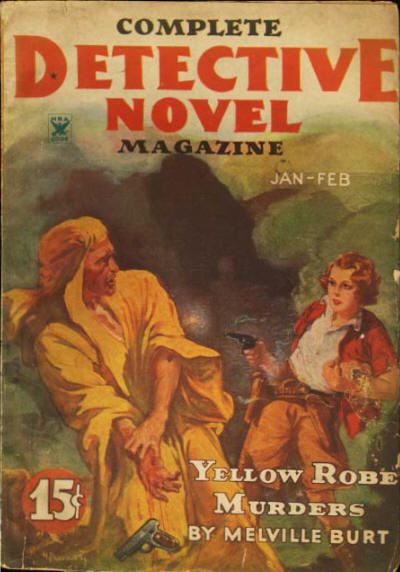

A few more copyright renewals in 1964 revealed another pseudonym, Judith Grovner Wright.
Bull passed away September 21, 1971, according to a death notice in the New York Times published on the 25th.
Bull passed away September 21, 1971, according to a death notice in the New York Times published on the 25th.
Labels: Ink-Slinger Profiles
Comments:
Thanks for the info! I've read "Broadway Virgin" and "Collect" recently and loved them both. Nice to learn more about Bull. And you mention her publishing "Gold Diggers" in 1949 under her own name, but it turns out "Gold Diggers" was just a flashier title for the reprint of her book "Collect". If you look at the "Gold Diggers" cover underneath the title "Collect" is written!
Post a Comment
Monday, May 12, 2014
Can't Get Enough of a Good Thing: Antics of Arabella


Do I really need to offer a reason to post a few more samples of Antics of Arabella? Nah, I thought not.
For background on the strip, see this post and this post. The reason Cole Johnson sent me these particular examples (from 1932 and 1931 respectively) was as proof that the feature was NOT in reprints after 1929, as I said way back then. Although for some odd reason the copyrights are old, the cheesecake pics are certainly current, as the shows these gals were in were running in 1931/32. No way they would have had Charlotte Stoll and Bee Sullivan doing calisthenics together by happenstance five years earlier, for instance.
Thanks to Cole Johnson for the scans!
Labels: Obscurities
Comments:
Post a Comment
